

When people struggle with productivity, they often look for better planners, new apps, or more effective routines. But one of the biggest influences on focus is often overlooked: your environment.
The spaces we spend time in can either support concentration or constantly compete for our attention. A cluttered desk, poor lighting, and endless distractions make it harder to focus, while a thoughtfully designed space can help work feel easier and more enjoyable.
The good news is that small changes can often make a noticeable difference.
Creating A Space That Works For You
When people struggle with productivity, they often look for better planners, new apps, or more effective routines. But one of the biggest influences on focus is often overlooked: the environment around us.
The spaces we spend time in can either support concentration or constantly compete for our attention. A cluttered desk, poor lighting, and endless distractions make it harder to focus, while a thoughtfully designed space can make work feel easier and more enjoyable.
Have you ever sat down to work and immediately felt overwhelmed by the mess around you? Research suggests that visual clutter competes for our attention, making it harder for the brain to focus on important tasks. This doesn’t mean your home or workspace needs to look perfectly minimalist, but keeping surfaces clear and removing unnecessary distractions can help create a calmer state of mind. Often, an organized environment leads to a more organized mind.
Lighting plays an equally important role. Natural daylight can help support alertness, mood, and energy levels throughout the day, which is one reason many people feel more focused when working near a window rather than under harsh artificial lighting. Even small changes, such as moving a desk closer to natural light, can make a noticeable difference in how a space feels.
Our surroundings also shape our habits more than we often realize. A workspace filled with distractions encourages procrastination, while a workspace designed for focus encourages deep work. Simple adjustments like keeping your phone out of reach, organizing cables, or creating a dedicated work area can help reduce interruptions and make concentration feel more natural.
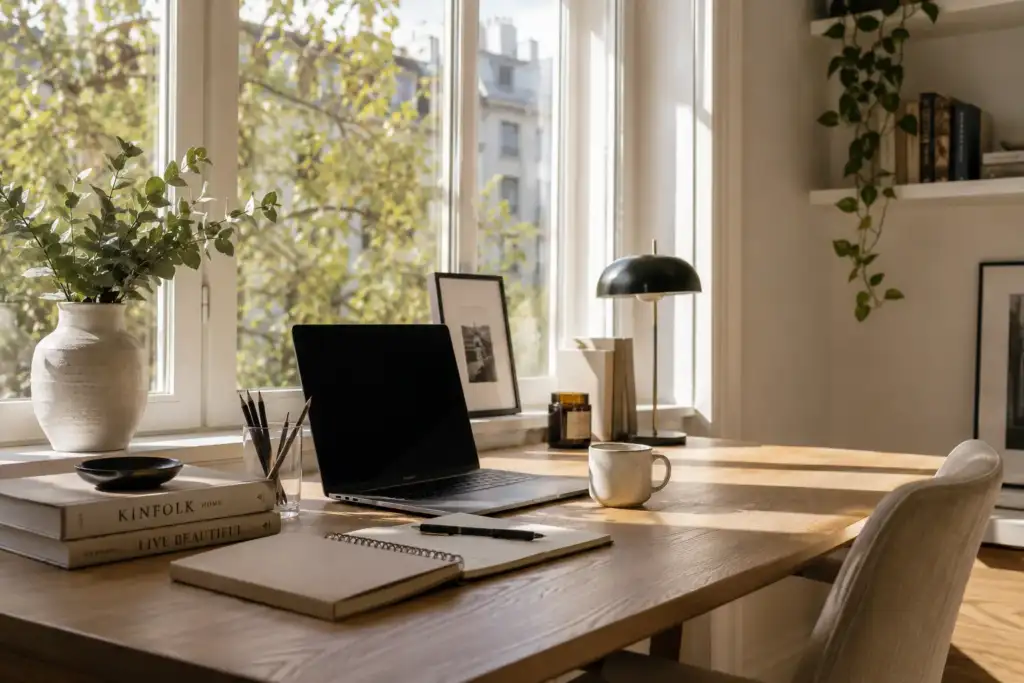
Comfort matters too. Productivity isn’t only about discipline or motivation. When a chair is uncomfortable, a desk feels cramped, or a room constantly distracts you, even simple tasks can feel more difficult than they need to be. Creating a comfortable and functional workspace removes unnecessary friction and allows you to focus on what matters most.
Interestingly, many highly productive spaces have one thing in common: intentionality. A clean desk, a plant, good lighting, a notebook within reach, and a calming color palette may seem like small details, but together they create an environment that supports better habits and clearer thinking.
Productivity isn’t always about working harder. Often, it’s about creating a space that makes focus feel natural. By reducing clutter, improving lighting, and designing an environment that supports your goals, everyday tasks can become easier and more enjoyable. Sometimes the simplest productivity upgrade isn’t a new app—it’s the room you’re sitting in.
Thank’s for reading!